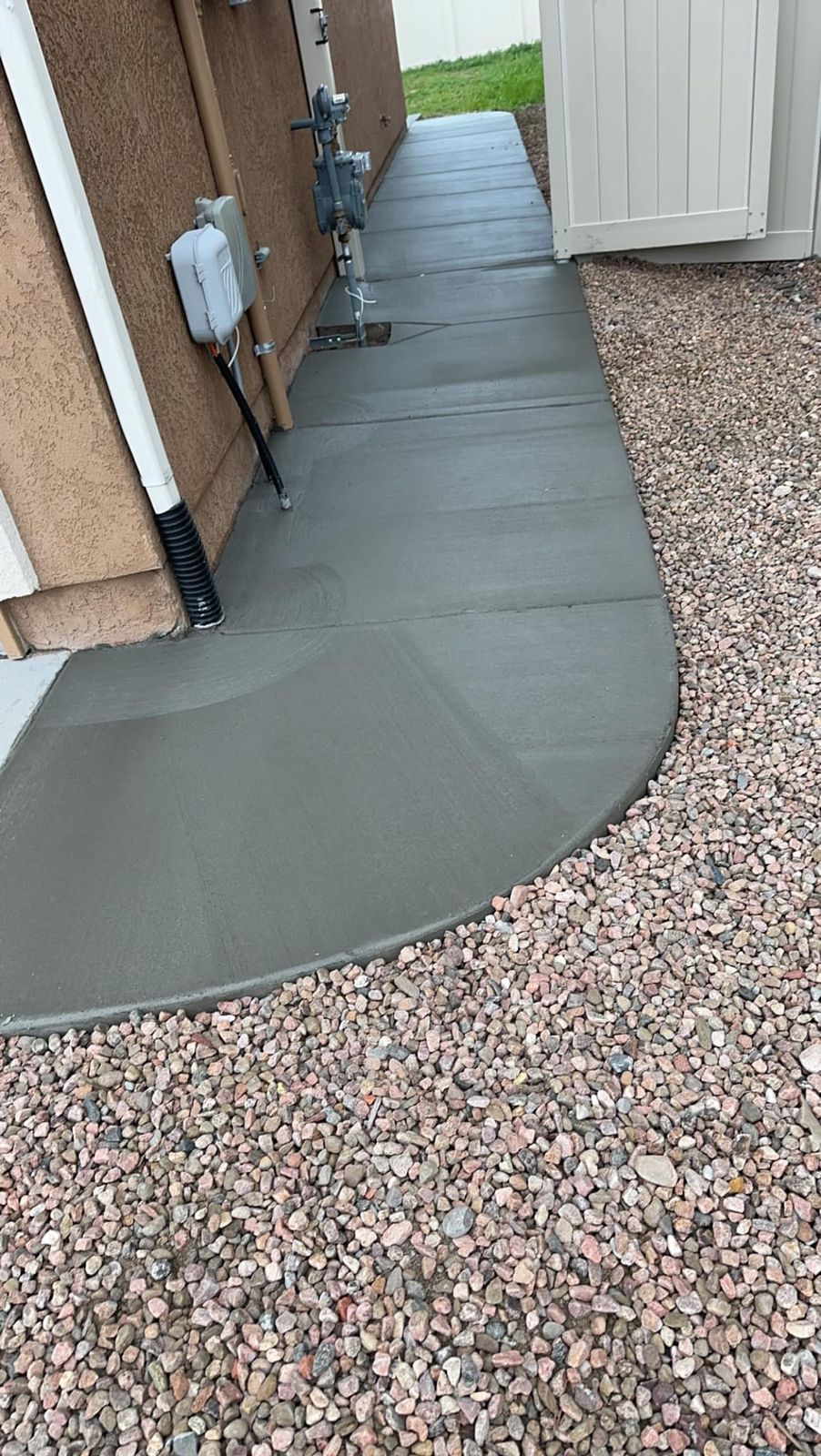
Criz's Concrete & Landscaping
Sidewalk Installation in Colorado Springs, CO
New concrete walkways for side yards, front approaches and garage runs. Sloped to shed water, saw-cut to control cracking, and edged clean against red rock, river rock and turf.
- Broom finishGrip underfoot when it is wet or icy.
- Sloped to drainWater runs away from your house.
- Saw-cut jointsStraight lines where the slab should crack.
Where walkways go
A walk for every route around the house
Most of our walkways are not the straight line off a driveway you picture. They squeeze down a side yard, hug a fence, curve past a rock bed or climb a slope. We pour them to fit the yard you actually have.
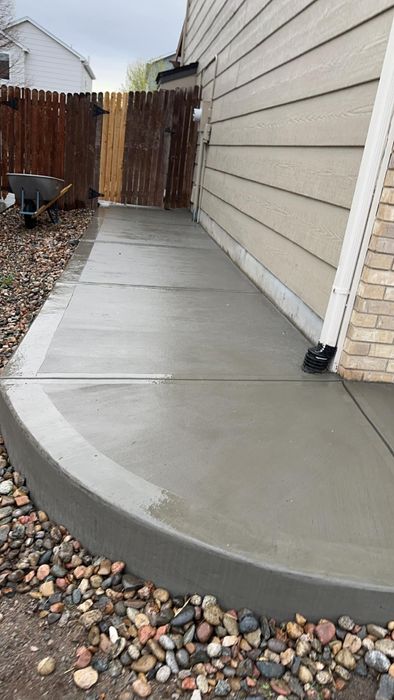
Around the house
A curved end and a river rock border keep a narrow run from feeling like a hallway.
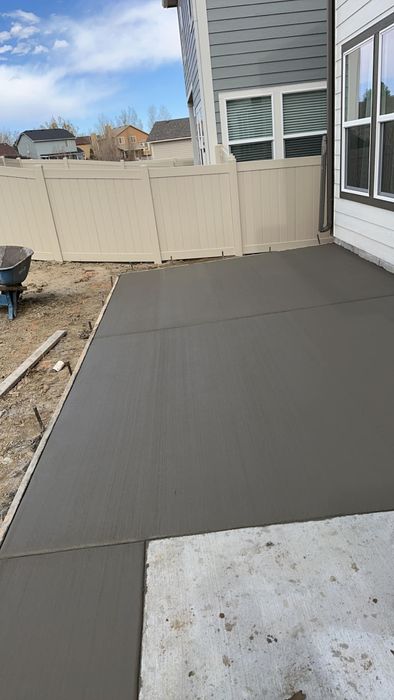
Fence-line walks
Straight, tight to the fence line and wide enough to roll a wheelbarrow through.
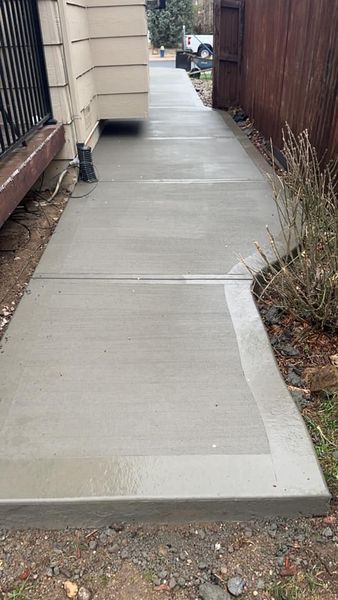
Back-yard routes
A clean path from the gate to the patio, so nobody tracks dirt across the lawn.
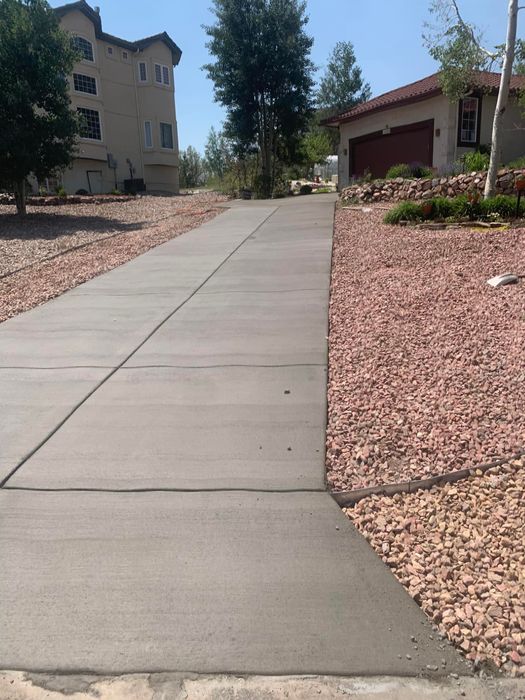
Up to the garage
A long run past red rock beds on a foothills lot, set to climb the slope without pooling water.
What makes a walk last
Built to shed water and survive a Front Range winter
A good sidewalk does three jobs. It carries foot traffic, it sheds water, and it stays put through a Colorado Springs winter. Criz's Concrete & Landscaping builds every walkway with all three in mind. We start with the base, because concrete is only as steady as the ground under it. Expansive clay moves as it soaks and freezes, so we grade the walk with a slight slope away from your foundation, never toward it. Saw-cut control joints go in so the slab cracks where we choose instead of where it wants to. A broom finish gives the surface grip when it is wet or icy. Where the walk meets red rock, river rock or turf, we set the edge clean so the border stays crisp. The result is a path that looks planned and drains properly.
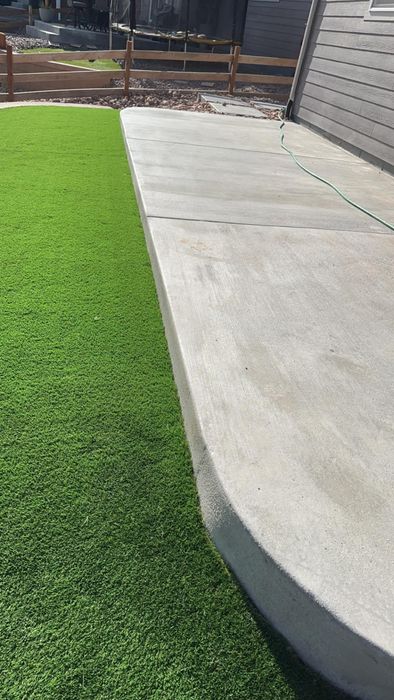
Edges
Concrete next to rock or turf needs a straight, firm edge. We form it tight so the border does not wander and the rock stays out of the walk.
Slope
Water that sits on a walk freezes on it. A gentle fall away from the house keeps meltwater moving and keeps it off your foundation.
Joints
Concrete shrinks as it cures and moves with the seasons. Cut joints at planned spacing give it somewhere to crack that nobody will see.
How a sidewalk gets built
From a string line to a finished walk
Five steps, in this order, every time. Skipping the early ones is how walks end up cracked, tilted or holding water.
- 1
Walk the route and agree the line
We walk the yard with you and mark where the walk starts, ends and turns. We look at gates, downspouts, sprinkler heads, rock beds and where water already runs. Then you get a free estimate.
- 2
Excavate and build the base
We dig out sod and loose soil, then bring in and compact a stable base. On new-construction lots, the bare dirt behind the house is often loose fill, so this step matters most there.
- 3
Set forms, slope and reinforcement
Wood forms define the edges and the curves. We set the fall for drainage and place reinforcement where the job calls for it. Most residential walks run about four feet wide, and we confirm the right width and thickness on site.
- 4
Pour, finish and cut the joints
We pour, screed and float the surface, then pull a broom across it for traction. Control joints are cut at planned spacing, so the walk has crisp lines instead of random cracks.
- 5
Cure, strip the forms and clean up
The new concrete needs time before it takes traffic. We strip the forms, backfill the edges and leave the yard tidy. We tell you how long to stay off it for your pour.
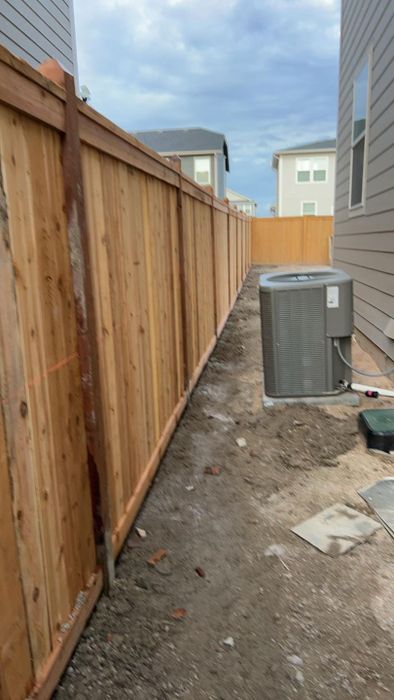
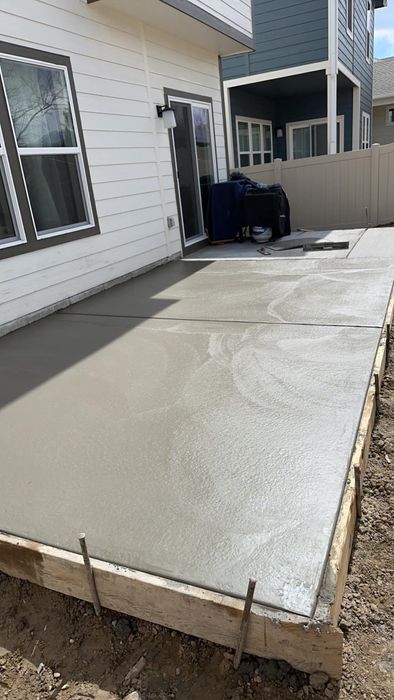
Prep first, then forms. The pour only goes as well as what is under it.
Pairs well with
A walk is usually part of a bigger yard plan
Many homeowners add a sidewalk while another project is already open. Pouring it with the patio or steps means one crew, one cleanup and edges that match.
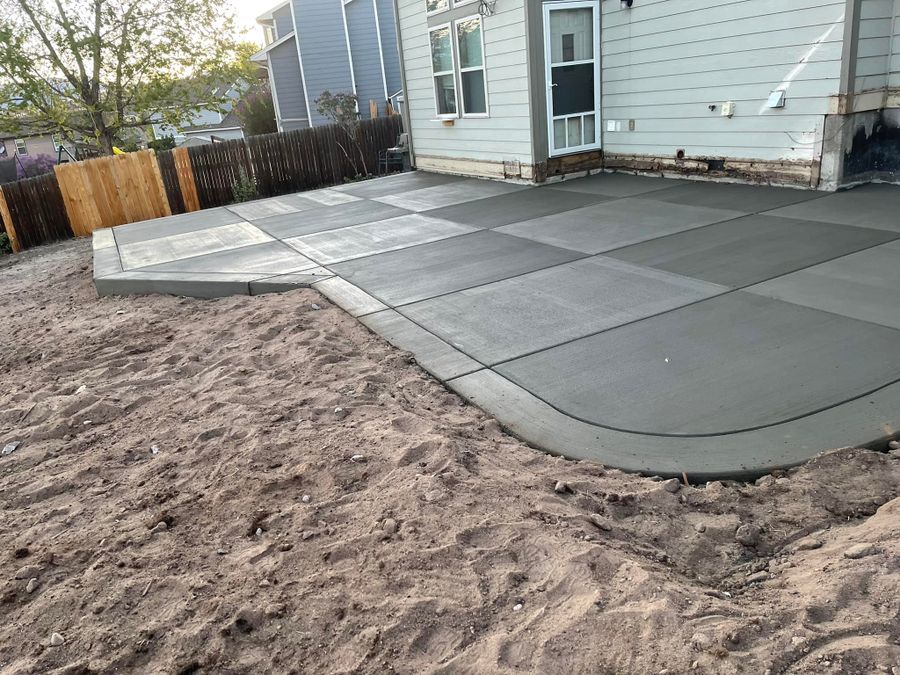
Patio design and installation
Where the walk ends, the patio begins. Plan the gate route and the patio slab together.
See patios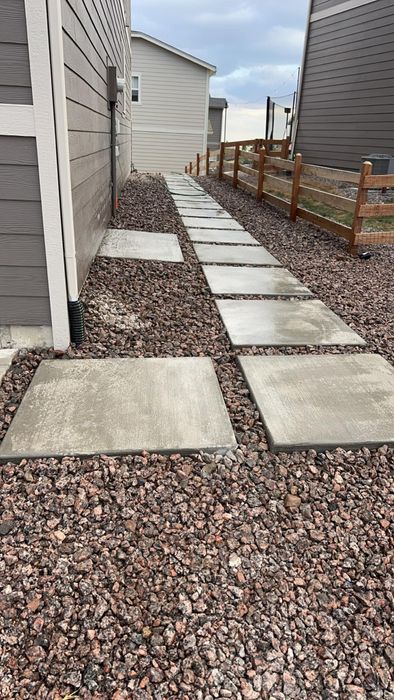
Landscape installation
Rock beds, turf and stepping stones frame a walkway and keep the edges looking finished.
See landscaping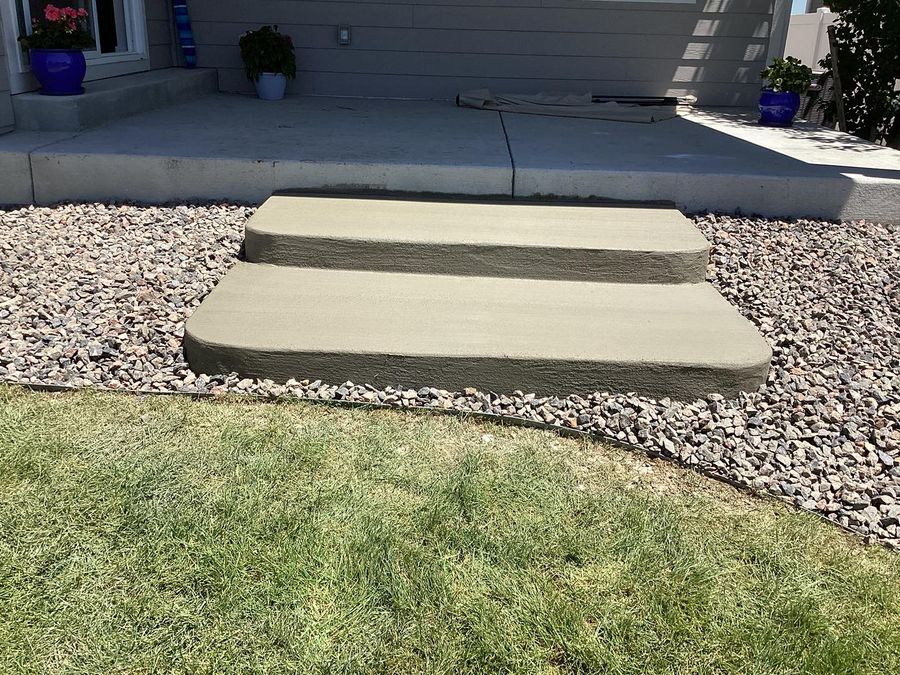
Stair design and installation
When the route climbs, steps tie the walk to a door or a deck without a tripping edge.
See stepsWant to see finished work first? Browse our work.
Sidewalk questions
Questions before we pour
Short answers to the questions that come up on most walkway estimates. Need something specific to your yard? Call or send a request.
What affects the cost of a new sidewalk in Colorado Springs?
Length and width set the amount of concrete, but the site does the rest. Tight side yards, slopes, old sod and rock to remove, curves, and how far the truck can reach all change the price. We look at the route in person, then give you a free estimate.
How does sidewalk installation work, start to finish?
We walk the route with you, excavate, compact a base, set forms with a slope for drainage, then pour, broom-finish and cut control joints. After the concrete cures we strip the forms and clean up. We explain each step on site so you know what is happening and when.
Do you build sidewalks outside Colorado Springs?
Yes. We pour walkways in Colorado Springs, Woodland Park, Divide, Canon City, Pueblo County, Parker, Elizabeth, Limon and Denver. Mountain lots up Ute Pass and acreage out toward Elizabeth and Limon each have their own ground and access, so we check the site before we quote.
How long does a new walkway take, and when can I walk on it?
A typical walkway is prepped and poured in a short visit, but the schedule depends on length, weather and base work. New concrete needs time to cure before foot traffic, and longer before heavy loads. We tell you how long to stay off yours when we finish.
Will a broom finish be slippery in winter?
A broom finish has fine lines across the surface that give your feet grip, which is why we use it on walks. No concrete is slip-proof, so shovel snow promptly. Go easy on de-icing salts for the first winter, since young concrete is more easily damaged by them.
Can a new walkway run along my fence or against the house?
Usually, yes. Many of our walks run tight beside fences, siding and rock beds. We set the slope so water moves away from the house, and we plan the edge against the fence or border. We check access and clearances on site before the pour.
Ready for a walkway that drains and lasts?
Tell us where it needs to go. We will look at the yard, talk through the route and give you a free estimate for your sidewalk in Colorado Springs or the surrounding area.