Monolithic Slab
Monolithic Slab Foundations in Colorado Springs, CO
Footing and slab, poured as one piece. Criz's Concrete & Landscaping forms the thickened edges, ties the rebar and pours monolithic slabs for garages, shops and outbuildings on Colorado Springs lots and the open land east of town.
- One placementFooting and slab poured together
- Rebar firstTied in the forms before the pour
- Plans from youEngineering and permits stay with the owner or builder
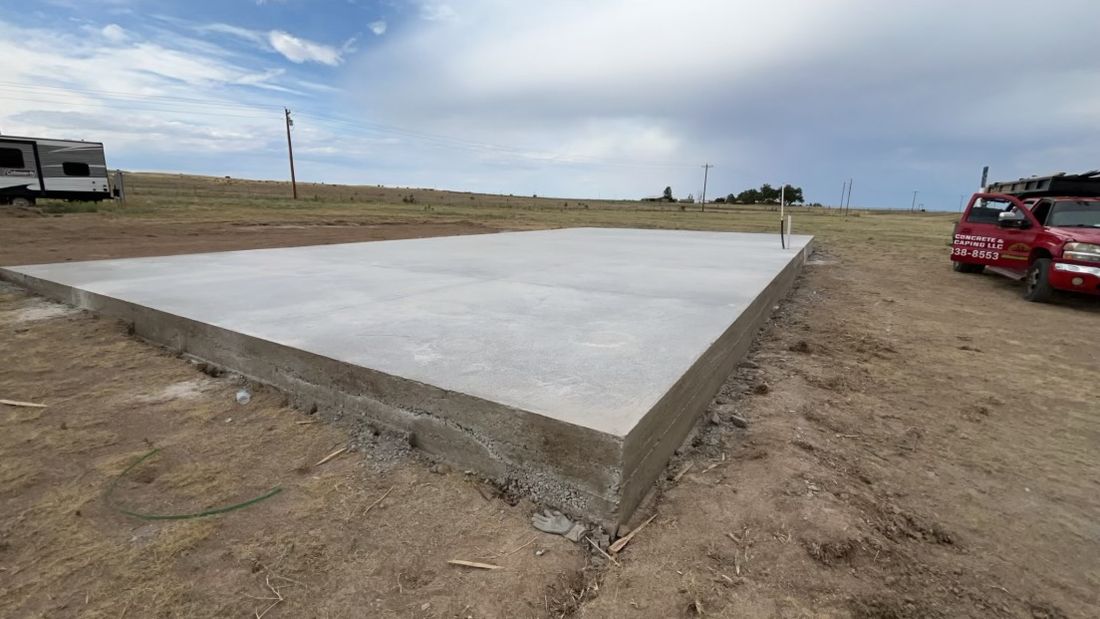
A finished monolithic slab on open land, ready for the next stage of the build.
How a monolithic pour goes
Forms and rebar, pour, finished slab
Three stages take a slab from bare ground to finished concrete. The photos below are from the crew's own jobs.
-
01
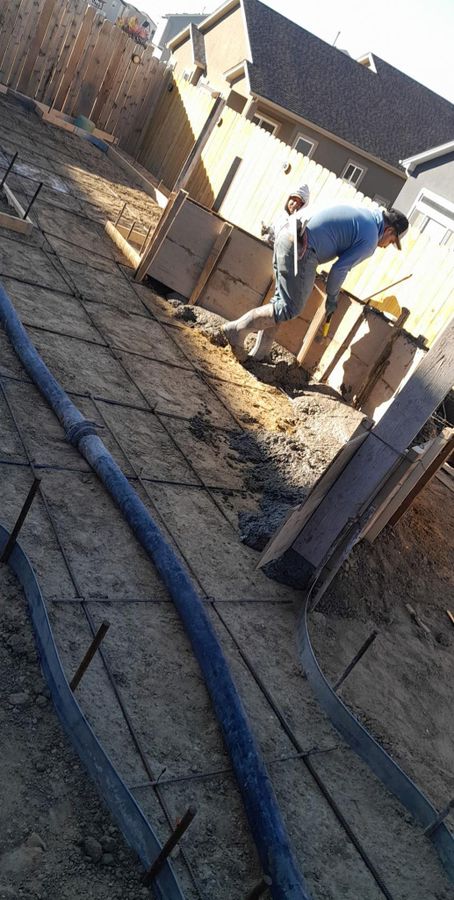
Photo: a crew member tying rebar inside the wood forms.
Forms and rebar
Wood forms outline the slab and shape the trench along the edge. Rebar goes in and gets tied so it stays where the plans put it when the concrete arrives.
-
02
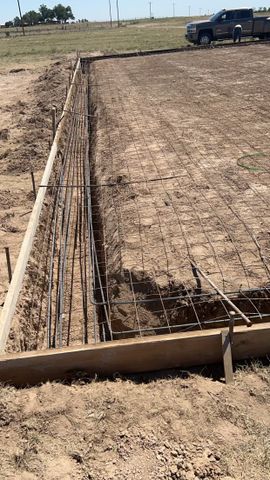
Photo: the rebar grid and formed trench footing, ready to pour.
Pour
Concrete fills the edge trench and the floor of the form in one continuous placement, then gets screeded level. That trench is the thickened edge, and it is poured with the slab, not before it.
-
03
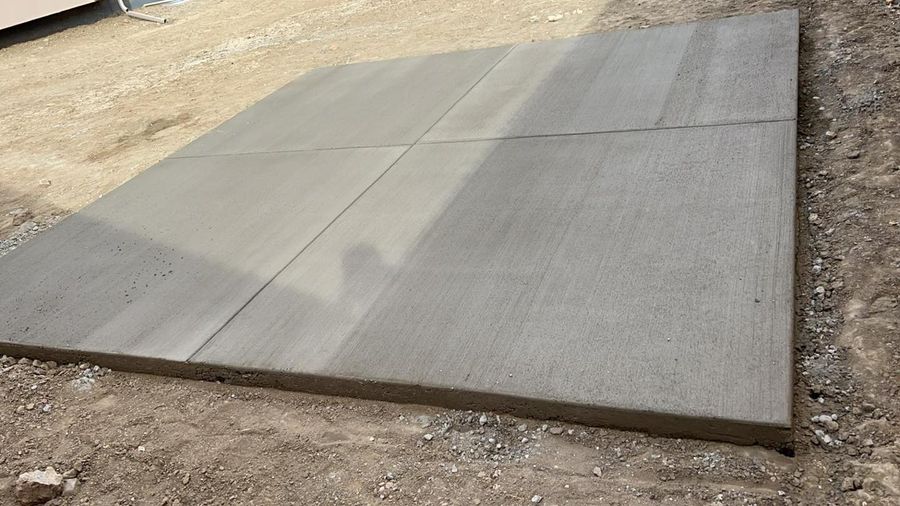
Photo: a small saw-cut pad on bare ground, finished the same way.
Finished slab
The surface is floated and broom finished, and control joints are cut so shrinkage cracks follow the lines. The forms come off and the slab cures before it takes weight. The photo at the top of this page shows a finished monolithic slab.
What makes a slab monolithic
One pour instead of three
A monolithic slab is a concrete foundation where the floor slab and its thickened edge footing are poured together in a single placement, so there is no separate footing, no stem wall and no joint between them. The edges are formed deeper and wider than the middle, rebar is tied in before the pour, and the whole slab is finished as one piece. It is a common choice for garages, shops, sheds and other buildings on a flat, well-prepared pad, where the plans and the local building department allow it. Whether it fits your building depends on the soil, the load and the code, and that answer comes from your plans, not from a guess. Criz's Concrete & Landscaping forms, ties rebar, pours and finishes monolithic slabs across Colorado Springs and the Pikes Peak region.
The other common approach is a footing poured first, a stem wall built on it and the slab poured last inside the wall. That is a normal way to build taller or deeper foundations. It means three pours and joints where each piece meets the next.
A monolithic slab skips those steps. The thickened edge acts as the footing and carries the weight down, while the thinner middle stays a floor. It leans hard on prep: a graded, compacted base, edges dug to the depth in your plans and rebar placed where the plans call for it. Front Range clay swells and shrinks with moisture and winters freeze, so the depth and width of that edge are never something to eyeball.
Monolithic slab One pour
- 1Thickened edge, the footing
- 2Slab, poured with the edge
- 3Compacted base
- 4Prepared soil
Footing, stem wall and slab Three pours
- 1Footing, poured first
- 2Stem wall, built on it
- 3Slab, poured last
- 4Joints between the pours
Simplified drawings, not to scale. Depths, widths and rebar come from the plans for your building.
Good fits
Buildings that sit well on a monolithic slab
These are typical uses, not a promise that a slab suits every site. Your plans and the building department decide what your building needs.
-
Garages
A flat, level floor with the footing built into the edge. A common match for a detached garage on a prepared pad.
-
Shops and pole-barn style buildings
Wide floors for equipment, vehicles and storage on acreage, where a bigger pad needs a plan and a solid edge.
-
Sheds and outbuildings
A stable base for a workshop, a hobby shed or a storage building that has to stay square and dry.
-
Additions, where plans allow
Some small additions can sit on a monolithic slab. That depends on the existing house and the plans, so confirm it first.
Plans, engineering and permits
A monolithic slab is part of the structure, so it starts with a plan. The drawings and any engineering come from the owner, the builder or a designer. Permits go through the building department that covers the property.
Criz's Concrete pours to those plans. Not sure what your building needs? Ask your builder or the building department first, then call us for an estimate.
Open land east of town
Flat acreage toward Elizabeth and Limon suits a monolithic slab: room for trucks and a simple pad. Mountain lots up Ute Pass, in Woodland Park and Divide, often need more grading and a closer look at the slope first.
- Colorado Springs
- Woodland Park
- Divide
- Canon City
- Pueblo County
- Parker
- Elizabeth
- Limon
- Denver
Questions
Monolithic slab questions, answered
Straight answers from the crew. If your question is about the plans, the building department is the right first call.
Do I need a permit or engineering for a monolithic slab?
Many buildings on a slab foundation need a permit, and the building department decides which drawings it wants to see. Plans and any engineering come from the owner, the builder or a designer, and we pour to them. Check with the department that covers your address before you book concrete, since requirements differ by city and county.
How much does a monolithic slab cost in Colorado Springs?
It depends on the footprint, how long and deep the thickened edge is, the rebar the plans call for, grading and fill, truck access, the finish and the weather. A flat pad on open ground costs less to prep than a sloped lot. We look at the site and give you a free estimate for the whole job.
How long does a monolithic slab take?
Forming, rebar and inspections usually take longer than the pour itself. A small slab is typically placed in a single day. Concrete keeps gaining strength for weeks, so we tell you when it can take foot traffic and when framing or heavy loads can start. Weather and inspection schedules can move the dates.
Do you pour monolithic slabs outside Colorado Springs?
Yes. We work in Colorado Springs, Woodland Park, Divide, Canon City, Pueblo County, Parker, Elizabeth, Limon and Denver. Open land east of town and mountain lots up Ute Pass each need a different site plan, so we look at the property before we quote.
What has to happen on the site before the pour?
The ground is cleared, graded and compacted, and the edge trench is dug to the depth in your plans. Anything that passes through the slab, like plumbing, should be located and set before concrete goes in. Tell us about truck access, slope and anything buried. We walk the site first and tell you what is needed.
What happens after the slab is poured?
The slab cures while the forms stay on or come off on a schedule we explain. Control joints are cut so shrinkage cracks follow the lines. Keep heavy loads off until we say so, and keep de-icing salts off new concrete through its first winter. Then your builder can move on to framing.
Planning a monolithic slab in Colorado Springs?
Send us your plans or tell us what you want to build and where. We will look at the ground and give you a free estimate.
Related work
Other slab and concrete work
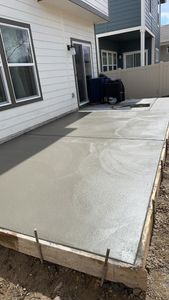 Concrete Slab ConstructionPads and slabs poured on a prepared base.
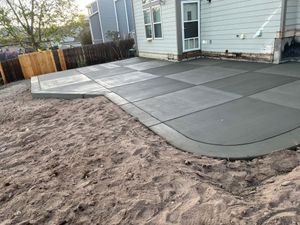 ConcretePatios, walks and more, poured to drain.
See more finished slabs and patios in our work.