Concrete Repair
Concrete Repair in Colorado Springs, CO
Cracked driveway, sunken walk, flaking patio, broken step. Criz's Concrete & Landscaping looks at what failed and why, then tells you straight whether a repair will hold or a new pour is the better money.
Serving Colorado Springs, Woodland Park, Divide, Canon City, Pueblo County, Parker, Elizabeth, Limon and Denver.
What we look at
Four kinds of damage, four different fixes
Concrete repair is the right call when the slab is still solid underneath and the damage sits on the surface or at an edge. A hairline crack, a chipped step edge or a patch of flaking surface can often be cut out and filled, and that costs far less than a new pour. Repair is the wrong call when a slab has sunk, heaved or cracked through in several directions, because the ground under it has already moved and a patch will not hold it. Colorado Springs is hard on flatwork. Freeze-thaw cycles pry water into every gap, de-icing salt eats the surface, and clay soils swell and shrink under the slab. So we find out why the concrete failed first, then give you a plain answer on repair or replace.
Cracks
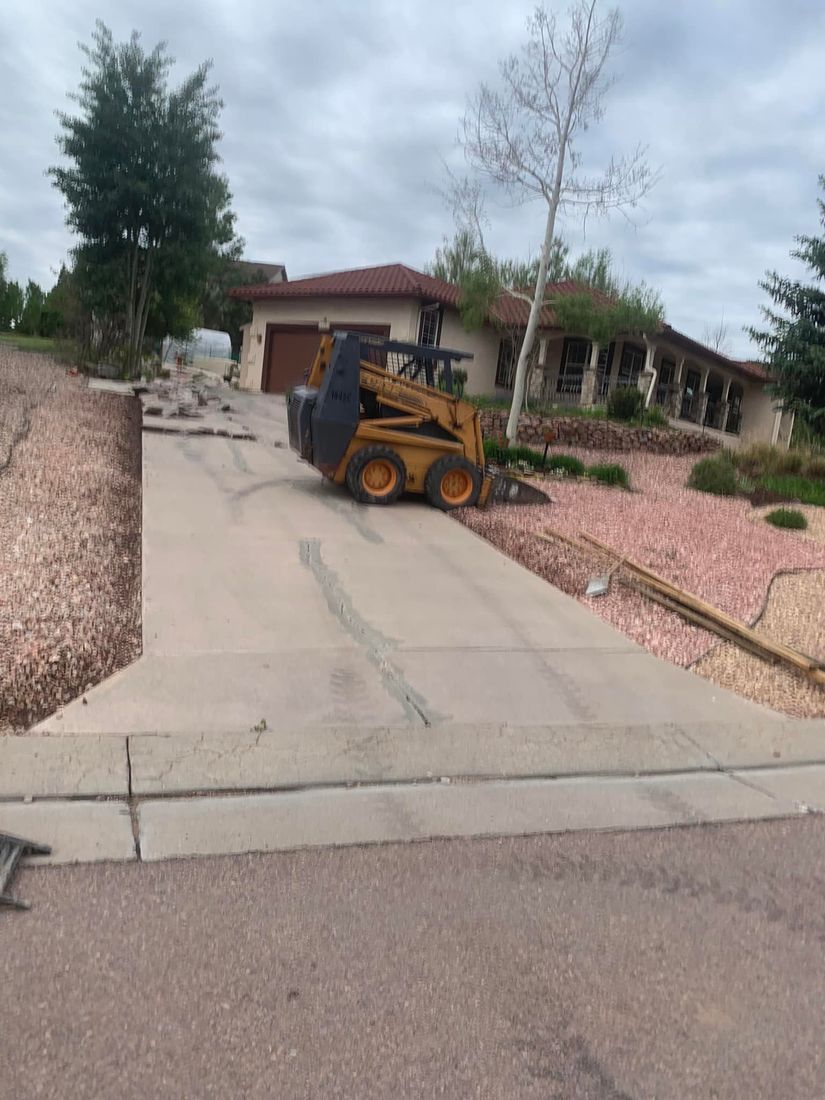
A thin crack that stays thin is mostly cosmetic. A crack that is widening, has one side higher than the other, or runs across the whole slab is telling us the base or soil moved. We check which one you have before we quote anything.
Sunken or heaved sections
Expansive clay, a washed-out base or frost can leave one panel sitting higher or lower than its neighbor. That is a trip hazard and a drainage problem. Often the fix is replacing that section, not patching over it.
Spalling and flaking
When the top layer peels, pits or turns rough, water and de-icing salt are working into the surface through freeze-thaw cycles. If the slab below is sound, we can address the damaged area. If it is flaking everywhere, replacing may be cleaner.
Broken steps and edges
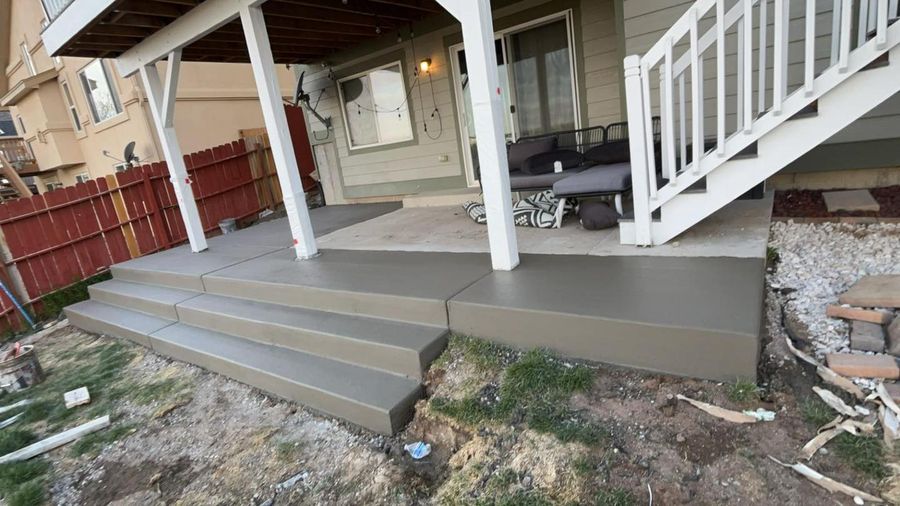
Chipped corners, crumbling nosings and loose step edges are a safety issue as much as a looks issue. Small breaks can be repaired. A step that is cracked through or pulling away from the house usually needs to be rebuilt.
Repair or replace
Which one is actually the better money?
We would rather tell you a repair is enough than sell you a tear-out you do not need. We would also rather tell you the truth when a patch is just delaying the same failure.
The slab is sound, the damage is local
If the concrete is firm, level and draining the right way, a targeted fix is usually the smarter spend.
- Hairline cracks that are not growing and are not offset
- A chipped step edge, corner or small broken section
- Surface wear in one area while the rest is solid
- A single bad panel that can be cut out and re-poured
Be realistic about looks. New concrete does not match old, and we do not promise it will. A repair is about function and safety first.
The slab has failed as a whole
When the problem is bigger than the surface, new concrete on a prepared base lasts longer than layers of patches.
- Cracks running in several directions, or panels that have shifted
- Sunken or heaved slabs that pond water or tilt toward the house
- Widespread flaking across most of the surface
- Repairs that have already been tried and failed
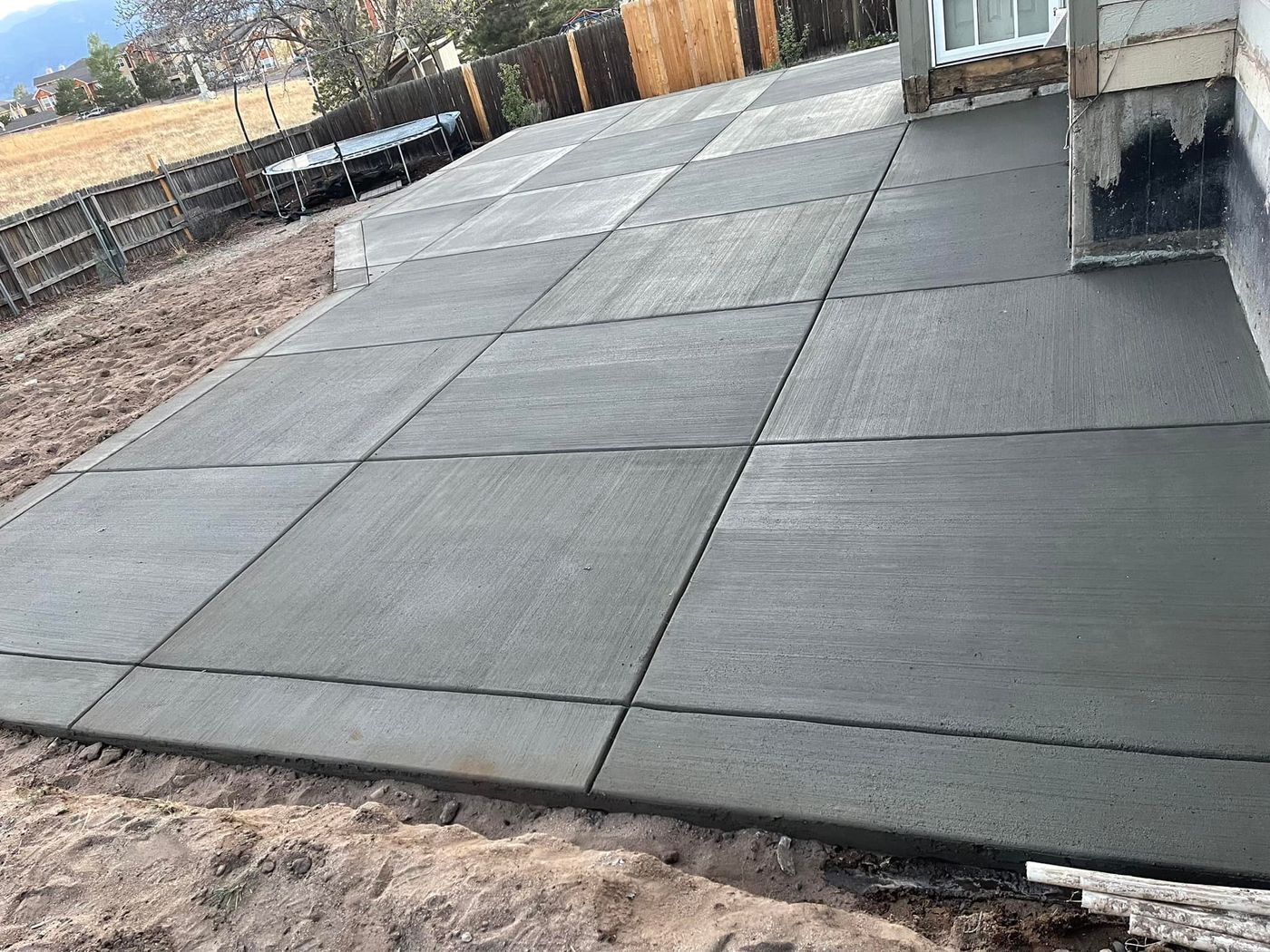
A new pour starts with removing the old slab and rebuilding the base, then forms, saw-cut control joints and a broom finish for traction. That is the same work shown in the patio photo above. If replacing is the honest answer, we price it that way and show you what is behind it.
How a repair job goes
Look first. Quote second.
-
01
Walk it with you
We look at the cracks, the slope, where water goes and what the ground under the slab is doing. You tell us what bugs you about it.
-
02
Repair or replace
You get a plain recommendation and the reasoning. If both options are reasonable, we lay out each one so you can pick.
-
03
Cut out and prep
Damaged concrete comes out clean. Loose material is removed, the base is corrected and forms go in where new concrete is needed.
-
04
Pour and finish
The work is finished to blend into the surrounding slab as well as it can, with control joints placed so cracks have a planned place to go. We tell you how long to stay off it.
Common questions
Concrete repair, answered
Not sure which bucket your concrete falls in? Send us what you see and we will start there. Related work:
What drives the cost of a concrete repair?
Mostly the size of the damaged area, how much has to come out, and what is wrong underneath it. A small patch is a different job from a section that needs a rebuilt base and new forms. Access matters too. We give a free estimate after seeing the concrete in person.
How does a concrete repair actually work?
We remove loose or failed concrete, prepare what is left so new material can bond, then patch or re-pour and finish the area. Where a section has moved, we rebuild the base under it first. The method depends on what we find, so we explain it before work starts.
Will the repair match the rest of my concrete?
Not exactly, and we will not promise it. New concrete is lighter than concrete that has weathered for years, and sun and salt change the surface over time. A good repair is flat, solid and blended in as well as it can be, but you may still see where it was.
Do you repair concrete outside Colorado Springs?
Yes. We work in Colorado Springs, Woodland Park, Divide, Canon City, Pueblo County, Parker, Elizabeth, Limon and Denver. Mountain lots up Ute Pass and acreage out east have their own soil and access issues, and we look at those when we come out.
How long before I can walk or drive on it?
It depends on the mix, the weather and what was poured. Foot traffic comes sooner than vehicles, and cold slows curing. We tell you how long to stay off each repair when we finish. Barricading it for that time is the easiest way to protect the work.
Why did my concrete crack, and will it happen again?
Common causes here are freeze-thaw cycles, clay soil that swells and shrinks, a weak base, or no control joints to guide cracking. If the cause is still there, a patch may crack again. That is why we look at the cause before we recommend a fix.
Get it looked at
Tell us what your concrete is doing
Send a few photos or call us. We will say what we think is happening and whether repair or a new pour makes more sense for your slab, steps or driveway.